
Enabling operators to control two sites remotely through a single interface
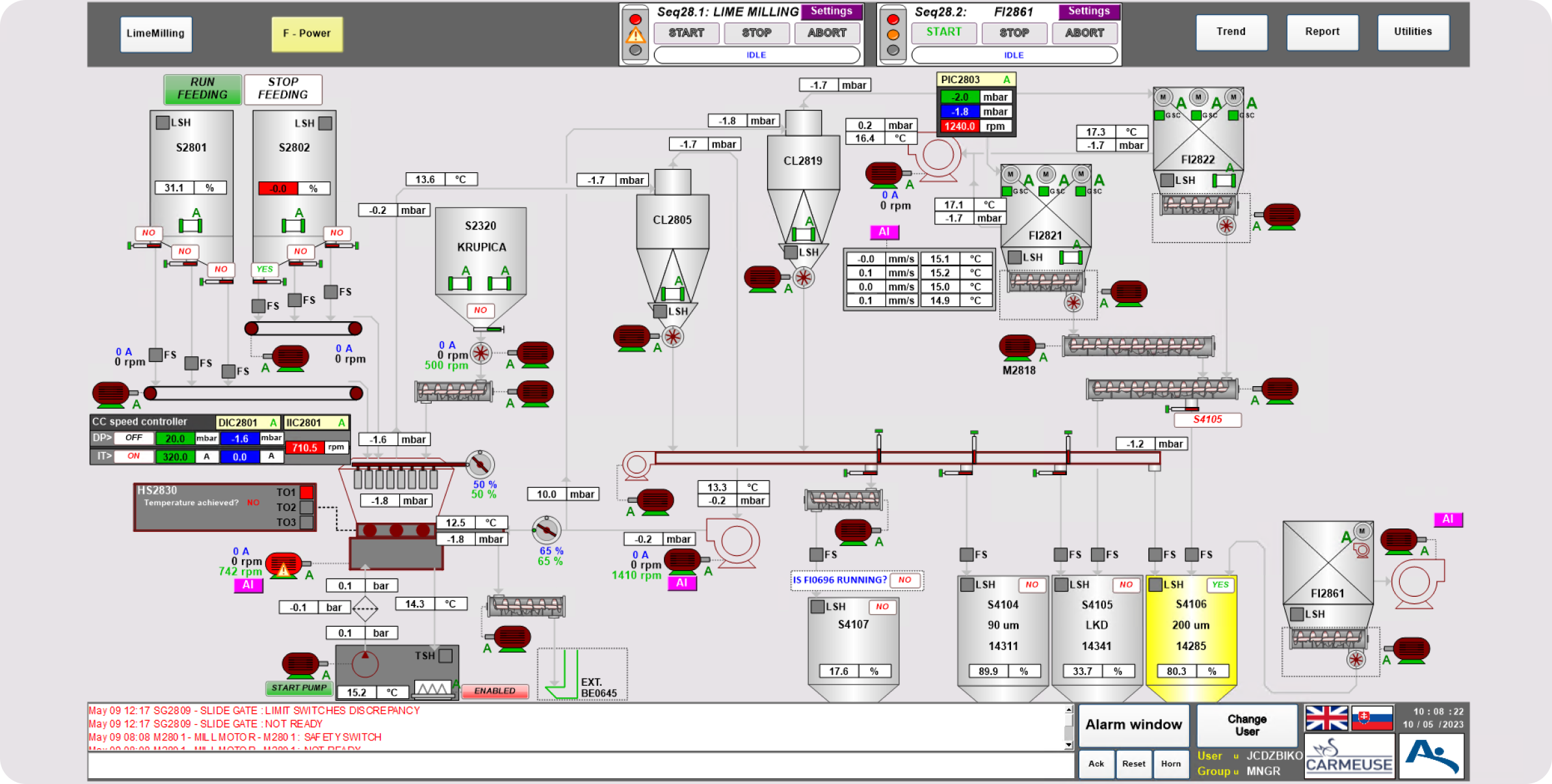
We enabled operators to control two lime processing plants in Slovakia from a single remote control room. The redesign involved simplifying the complex interface, improving navigation, and enhancing the visual representation of the plant, thereby reducing the need for multiple physical screens.


Team
3 UX designer, 1 UI designer, 1 project manager
Industry
Quarrying industry
Language
English
Year
2023 – 2024
My role
My role as the UI lead, was to create visual assets and a library of components for the interface. It was important for me to focus on safety standards and understand how to represent data effectively. I had access to literature and documents on best practices, and within the limits imposed by the development platform, I simplified the plans representation.
Methodology
We applied the Design Thinking methodology, starting with a field study in Slovenia to observe operators in their usage context. We gathered the requirements for the interface redesign, identifying critical aspects for improvement. We worked with an external organization to understand proxemic aspects. The complexity of this project lay in the intricate interface and development constraints, so we paid close attention to best practices and maintained constant communication with the client, working closely and in sprints.

Approach
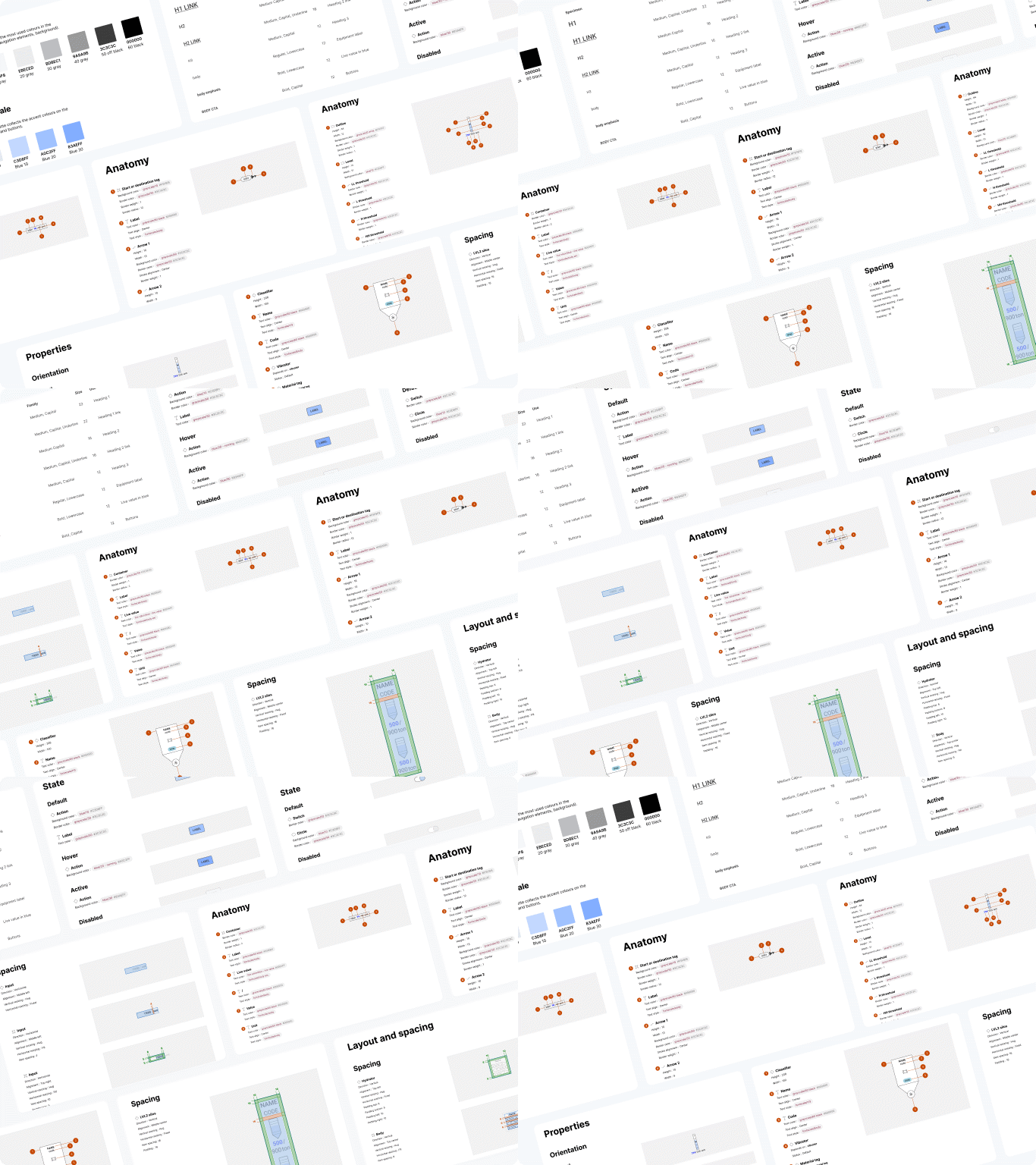
With these inputs, we planned weekly sessions to establish a deliverables calendar. The activities were structured as follows:
- Study of the existing flow or interface, defining points for clarification
- Sessions with the client to guide us in understanding the interface
- Co-creation sessions with the team
- Interface co-creation
- Interface review
The team consisted of four members: one PM, three UX designers, and me as UI designer, to create a design system that centralized all information related to the platform redesign. To achieve this, I:
- Developed a vocabulary of symbols to easily recognize the equipment in the project’s initial phase
- Designed a flow for each sprint to manage tight schedules and spatial constraints, ensuring I could understand and define rules for spacing, contrast, etc.
- Organized weekly reviews with the team and clients to refine the design system
- Recorded updates, requests, and changes from the client and the design team
- Defined rules to simplify the representation of symbols
- Conducted research on best practices
Deliverables
We have designed:
- A design system: a single source of truth for developers, designers, business profiles and operators, containing a vocabulary of symbols, rules related to spacing, colors, typography;
- Screens: wireflow and wireframe for the entire application and a sitemap as an index
- Documentation: the documentation of components and all interactions in digital and pdf.
- User test results: user tests’ protocol and results, and the insights we got in the research phase.

☞ What I learn
👉🏼 When working on something complex, you need to refer to every document, book, and article that can inform you about similar cases because the amount of information to acquire is vast. Making an error in judgment or showing naivety, especially in the early stages of the project, can have severe consequences on the budget and the team.
👉🏼 Working solely on the UI for complex projects is very limiting. Therefore, as a facilitation element, I also took on minor UX design tasks in this project. This approach facilitated my understanding and benefited the rest of the team.
👉🏼 It’s beneficial to draw from literature, but it’s also important to detach from it when necessary. The key is to always have a strong design rationale and to discuss it within the team, considering clients as active members of the team.
 Alessandra Rodilosso Portfolio