
Designing a design thinking methodology online course
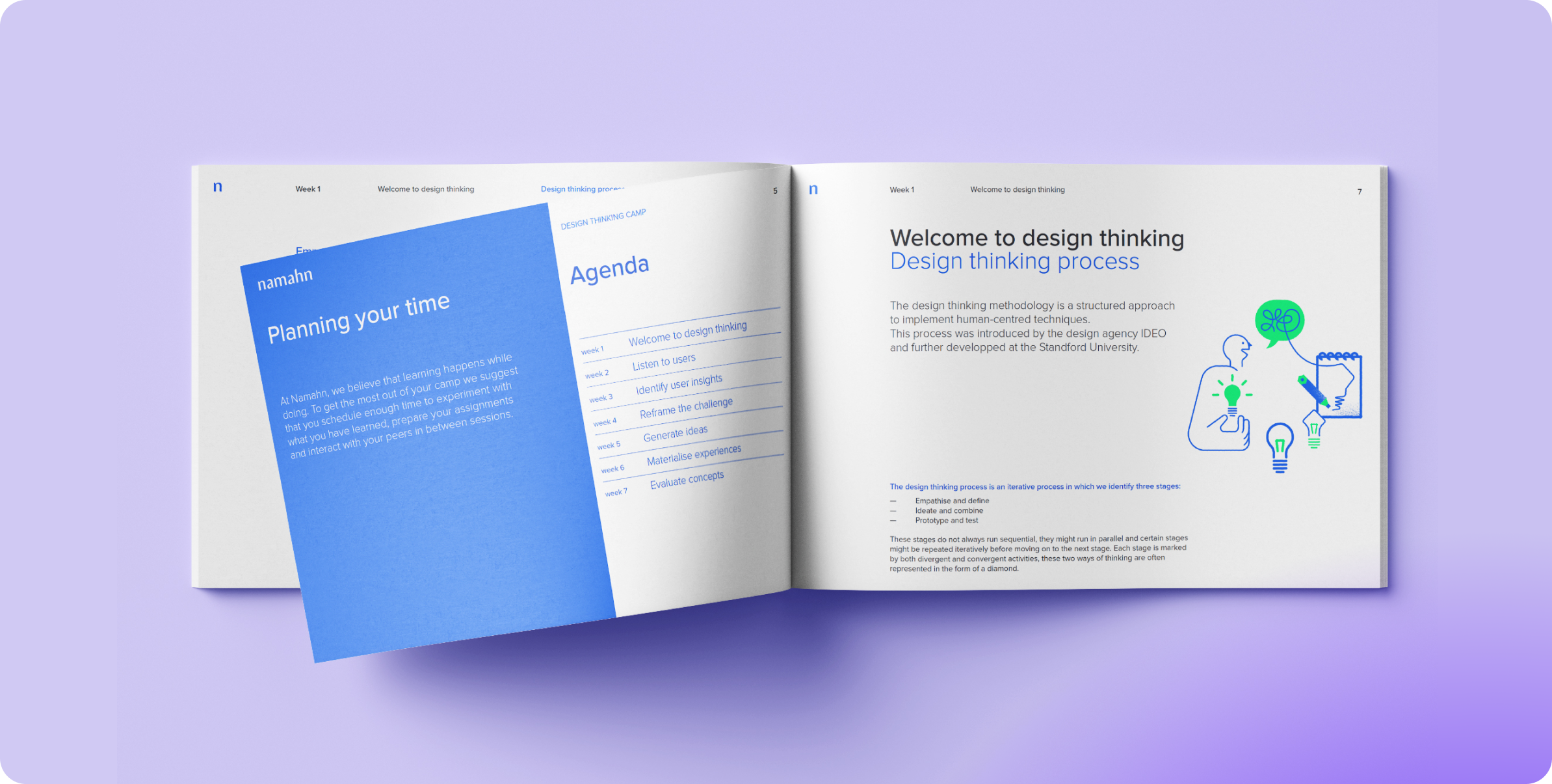
We’ve designed an online training program aimed at familiarizing participants with design thinking principles and essential tools. Our objective is to ensure accessibility to individuals of all backgrounds, facilitating their comprehension and application of this innovative problem-solving approach. This online format allows us to reach a broader audience and ensures that the training can be easily replicated without excessive effort.
Training’s structure
We designed seven sessions to meet our learning objectives. In the first session, we explain the design thinking process, providing a comprehensive overview of its stages and principles. The second session focuses on recognizing the key questions to ask during a design project, ensuring that participants can identify the right areas of inquiry.
In the third session, we delve into formulating unbiased questions, teaching participants how to craft questions that elicit genuine and useful insights. The fourth session is dedicated to recognizing design challenges from user insights, helping participants identify and understand the core issues faced by their users.
During the fifth session, we introduce and apply various ideation techniques to the identified design challenges, encouraging creative and innovative thinking. The sixth session involves selecting and combining ideas into coherent, end-to-end concepts, ensuring that participants can develop comprehensive solutions.
Finally, in the seventh session, we prepare and run a basic concept test, guiding participants through the process of evaluating their concepts in a real-world scenario. This final session ensures that the solutions developed are practical, effective, and user-centered.
Approach
The best way to meet the learning objectives is to focus more on hands-on learning and keep the theoretical part of the training to a minimum. To do so All sessions have a similar setup, except for the first one. In the first session, we start with getting everyone onboard and explaining what we aim to learn and what’s expected from everyone:
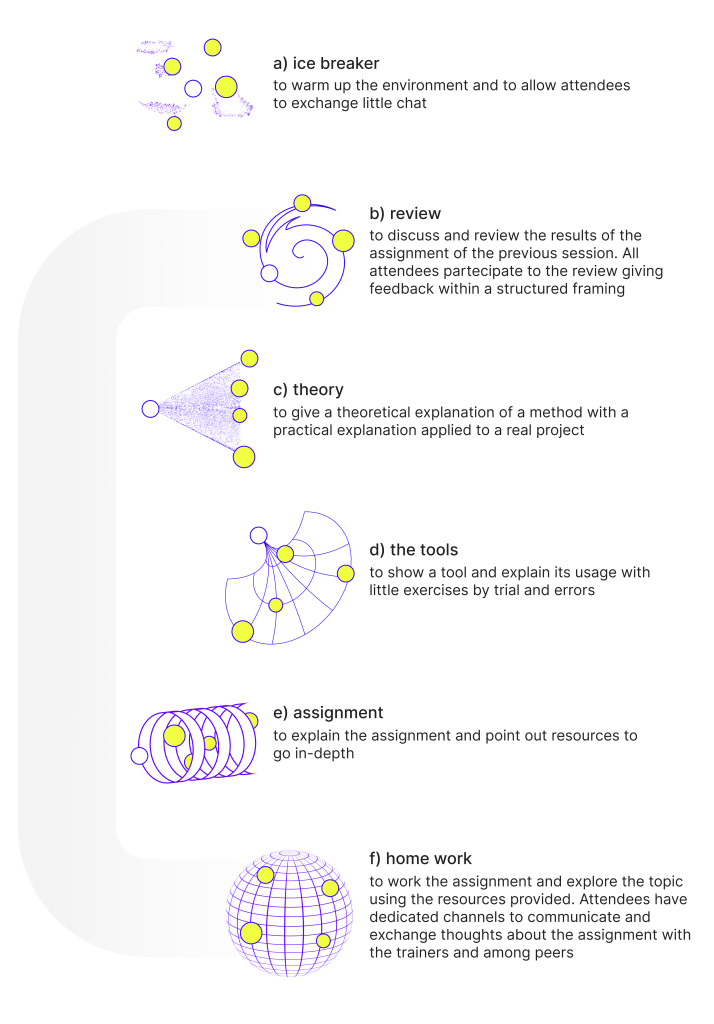
The deliverable
We’ve created various resources to support our participants throughout the training. Personally, I’ve overseen the development of these materials and channels, ensuring they meet quality and consistency on a content and formal level:
☞ A syllabus containing theories and additional resources to help delve deeper into the theoretical aspects of the training.
☞ An interactive presentation crafted on Figma, offering an engaging way to explore the content.
☞ A Miro board equipped with essential tools to facilitate collaboration and learning.
☞ A dedicated team channel established for communication and file sharing among participants.
☞ A playlist of music to complement the learning environment and enhance engagement.
 Alessandra Rodilosso Portfolio